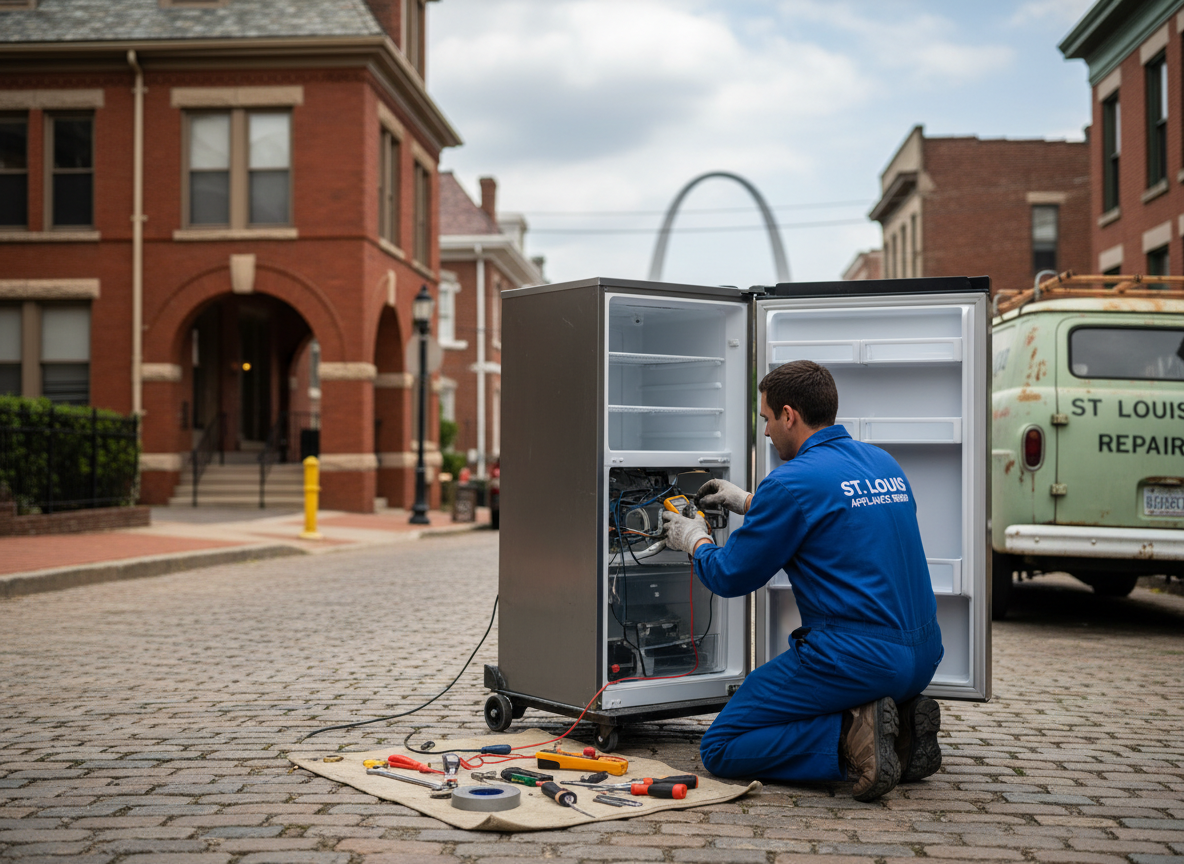
St. Louis summers push compressors hard while winter cold combined with frequent severe storms creates voltage swings that damage control boards and defrost timers. Homes in neighborhoods like The Hill and Lafayette Square often hold units from the 1990s or earlier whose door gaskets have hardened from years of humidity cycling. Technicians arriving from the 5105 Columbia Ave base routinely check both the sealed system and the electrical supply because a single surge during a July thunderstorm can mimic a failing compressor.
Older multi-story buildings in Midtown and Forest Park Southeast place refrigerators in tight kitchens with limited airflow around coils, accelerating dust buildup and shortening fan motor life. Technicians carry both R-134a and R-600a gauges because many units in Webster Groves and University City still run older refrigerants that require exact recovery procedures. Ignoring these details leads to repeat leaks once the weather turns hot again.
Power fluctuations from storms also affect electronic defrost boards common in side-by-side models popular in Soulard row houses. A thorough job includes verifying the defrost heater resistance and the adaptive defrost control rather than simply swapping the board. Homeowners who attempt their own board swaps without addressing the underlying surge often see the new part fail within weeks.
Technician insight
In St. Louis, the thing that catches most people out with Refrigerator Repair is how our frequent severe storms send voltage spikes through older wiring in neighborhoods like Benton Park and Shaw, frying control boards that homeowners then blame on the compressor itself.
Defrost Board Failure After Storm
A refrigerator in a Tower Grove South home stopped cooling after a severe thunderstorm. Diagnosis showed the defrost control board had shorted from a power surge while the sealed system remained intact. The board was replaced and the unit was tested through multiple cycles. Temperatures stabilized and the homeowner avoided an unnecessary compressor replacement.
How it works
- 1
Arrival And Safety Check
Technician confirms 120-volt supply at the outlet and isolates the unit before any disassembly in homes across St. Louis.
- 2
System Diagnosis
Pressures, temperatures, and board error codes are recorded to separate sealed-system faults from electrical or airflow problems common after local storms.
- 3
Component Repair Or Replacement
Failed parts are replaced using manufacturer-specified components while refrigerant is recovered and weighed back in per EPA rules.
- 4
Performance Verification
Unit runs through a full cycle with door seals tested and coils cleaned before the technician leaves the address.
Pricing
Upfront quote given after diagnosis; no hidden trip fees within St. Louis city limits.